Home About
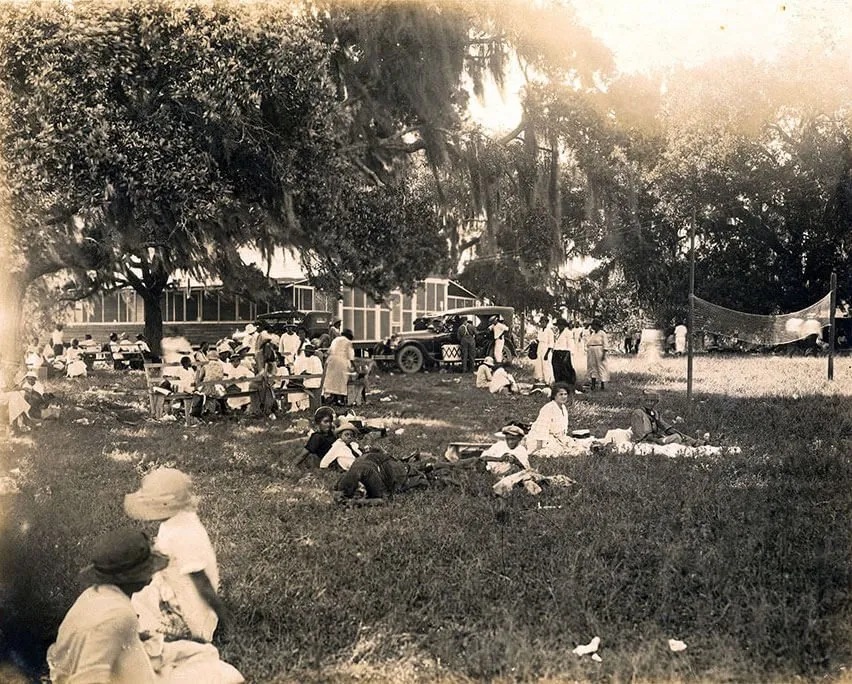
A sanctuary by the sea
How one bishop’s idea became the first permanent African American Chautauqua-style resort on the coast — and why it is still standing a century later.
Photo courtesy of the Hancock County Historical Society
1922 – 1924
The Gulfside idea
In 1922, Bishop Robert E. Jones spoke at Lakeside Assembly, a Methodist Chautauqua resort in Ohio that offered religious instruction, education, the arts and recreation each summer. Black Methodists in his Southern conference had nothing like it — in the Jim Crow South, they were shut out of the beaches, hotels and meeting halls their white neighbors used.
Jones decided to build one. With $4,000 raised from churches and individuals, he bought 300 acres and leased another 316 acres along the beach at Waveland, Mississippi, on the coast east of New Orleans, where his office was.1
The Gulfside Chautauqua and Camp Meeting Ground opened on April 16, 1923, and was incorporated on January 24, 1924.1 Its charter promised a school, assemblies, conferences, camp meetings, homes for orphans and resorts “for health, rest and recreation, for children, the aged, disabled and others.”2
The founder
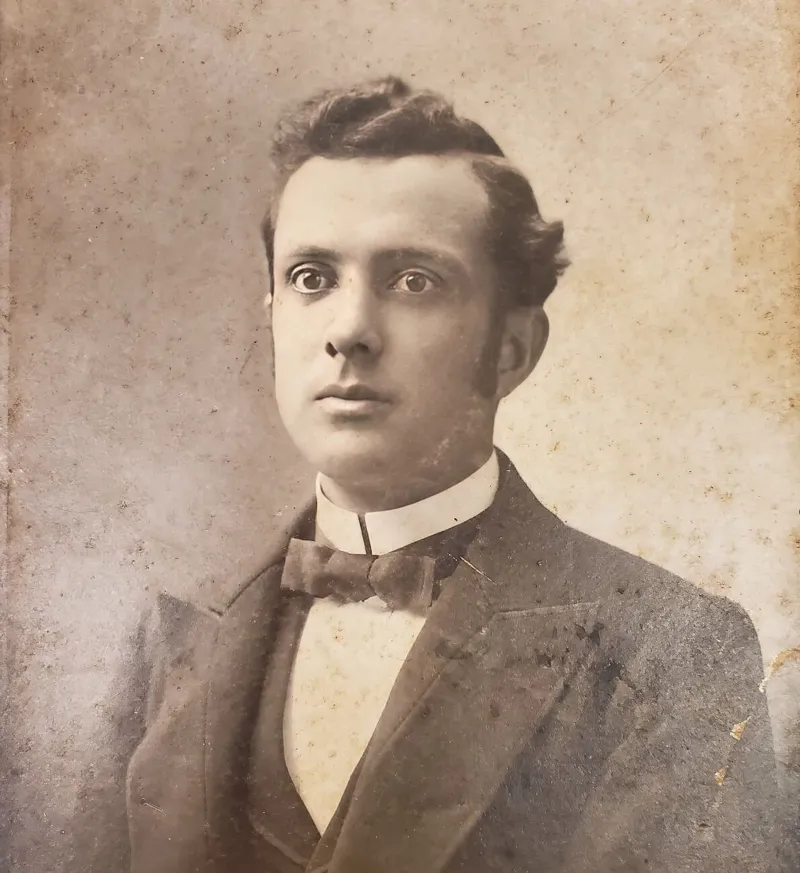
Bishop Robert Elijah Jones
For sixteen years Jones edited the Southwestern Christian Advocate, the Methodist Episcopal newspaper published in New Orleans and read across the South.3 In 1920 he and Matthew W. Clair Sr. became the first African American bishops elected in the Methodist Episcopal Church,4 and Jones became the first African American to serve as a general superintendent of the church.2
His first wife, Valena C. Jones, was a celebrated New Orleans teacher who helped him edit and publish the Advocate. After her death in 1917, a New Orleans public school was renamed in her honor.12 The film tells her story too.
Gulfside was his life’s work. Jones led it through its first two decades, and he is buried on its grounds beside his second wife, Elizabeth Brown Jones.5
“Mr. Jones had the foresight, fortitude and vision to build such a wonderful facility.”Daryl Dabon Jarvis, premiere audience
Life at Gulfside
More than a beach. A school, a pulpit and a meeting ground.
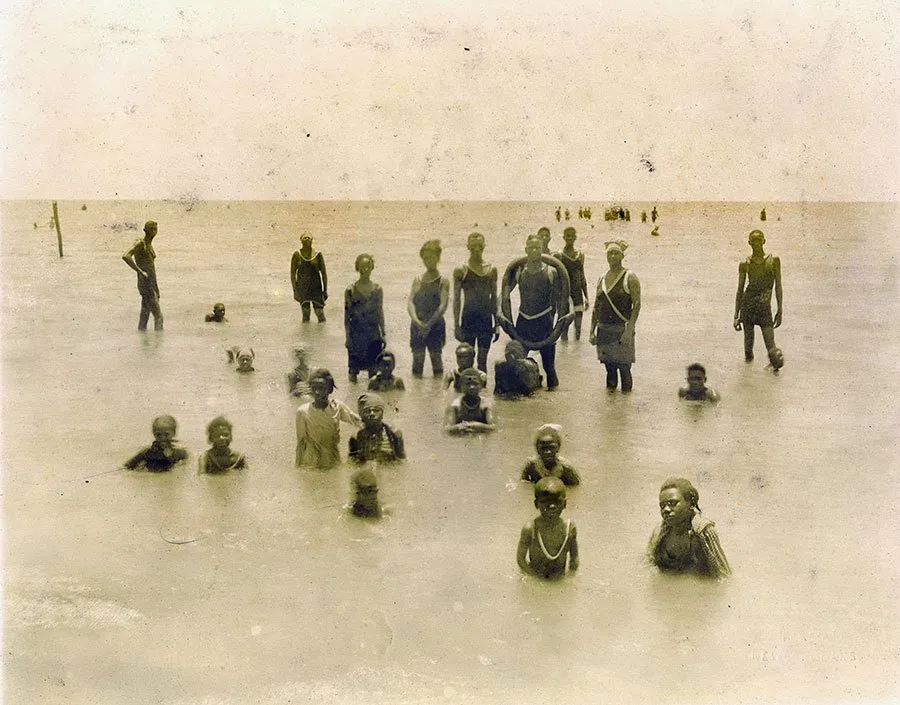
Training for ministers and teachers
Summer schools and institutes prepared Black pastors and educators across the Deep South.2
A school for poor boys
An industrial training school offered education and a trade to impoverished young Black men.2
Camps and retreats
Boy Scout and Camp Fire Girls camps, and recuperative summer retreats for “tired mothers.”2
Collaborations for change
Gulfside was one of only three places in Mississippi, with Tougaloo and Rust colleges, that served as meeting places for Black citizens during the civil rights movement.6
“Everything that happened in Hancock County for black folks happened in Gulfside. So when racial or social injustice came about, we met at Gulfside.”
Art Philip Clementine, in the film
Storms & survival
Destroyed, and rebuilt, again and again.
Holding beachfront land in Jim Crow Mississippi took constant negotiation. Holding it against the Gulf took something more.7
- 1940s
Fire
The old Jackson House, which Jones had turned into a school for Black children, was destroyed by fire.8
- 1969
Hurricane Camille
A Category 5 hurricane devastates the Mississippi coast. Gulfside rebuilds.
- 2005
Hurricane Katrina
Every building is lost — 13 in all — including the new lodging and meeting center named for Bishop Alfred Norris.9
Gulfside today
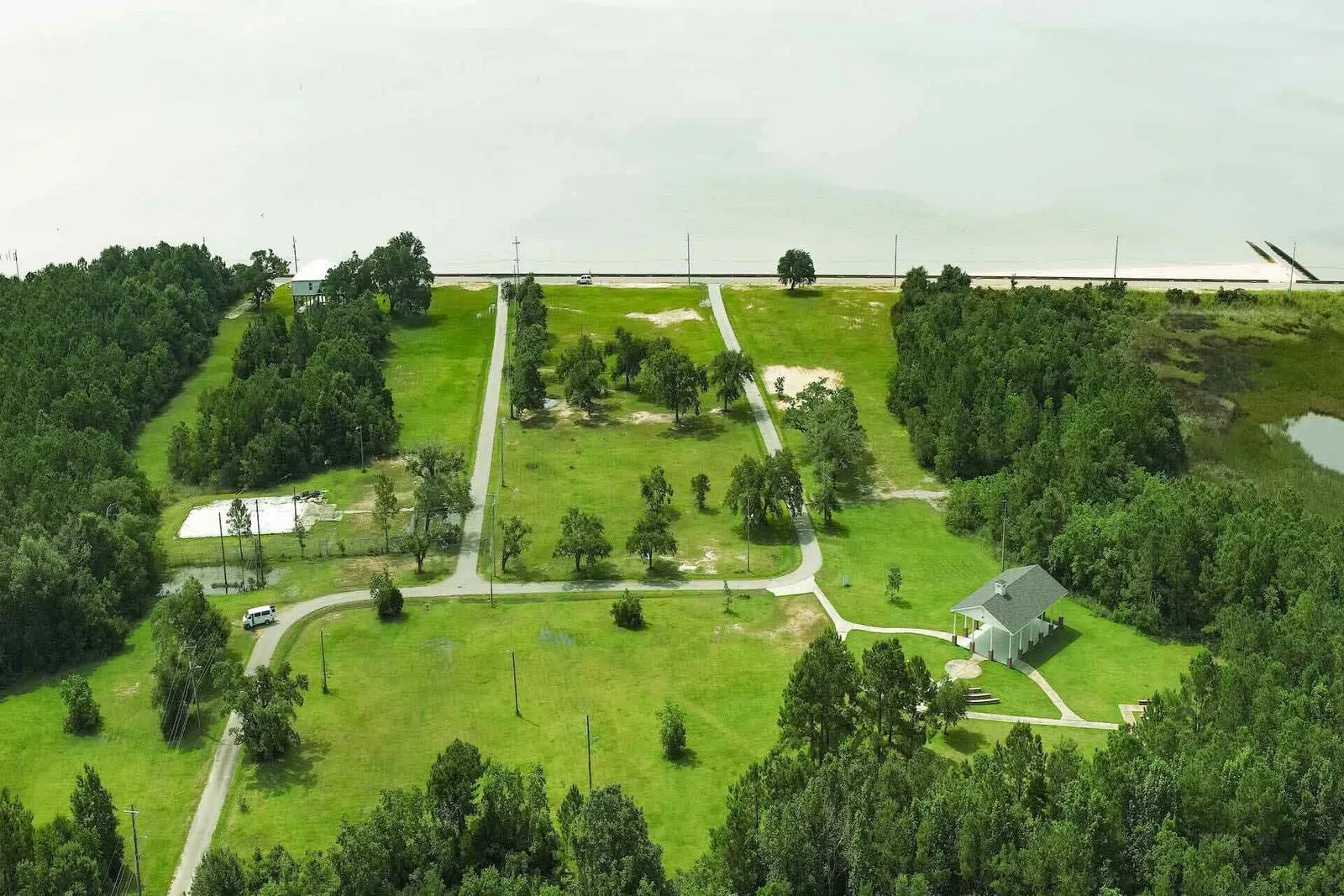
The legacy lives on
In 2016, the United Methodist Church named Gulfside a Heritage Landmark, and an open-air prayer chapel was dedicated in honor of Bishop Leontine Kelly, the first African American woman elected a bishop in the United Methodist Church.1
Gulfside remains one of only two African American Chautauquas left in the country, and the only one owned by the community it serves. Under Executive Director Cheryl Thompson, it runs youth leadership programs, life skills training, college tours, senior services and community advocacy.
The next chapter is a weather-resistant ministry center for retreats, conferences and education, along with affordable housing for local families.
Visit gulfsideassembly.orgThe documentary
About The Gulfside Assembly Story
Directed by Leonard Smith III and produced by LS3 Studios with Gulfside Assembly, the film follows the century in three acts: the life of Bishop Robert E. Jones, the history of Gulfside Assembly, and the Gulfside Experience told by the people who lived it.
Built from Hancock County Historical Society photographs, archival research and first-person interviews, it has screened at universities, churches and Chautauquas from Mississippi and Louisiana to California, Ohio and Washington, D.C., won two Silver Telly Awards and a Communicator Award of Excellence, and been accepted by PBS for national broadcast in 2025.
- Director / Producer
- Leonard Smith III
- Writer / Producer
- Tod Smith
- Director of Photography
- Larry Everage Jr.
- Executive Producers
- Leonard Smith III · Cheryl Thompson · Rev. Dr. Elijah Stansell
- Production
- LS3 Studios
- Archival images
- Hancock County Historical Society
Further reading & sources
Go deeper
- “Gulfside Assembly: Historic Center for African American Mission,” The United Methodist Church (UMC.org).
- “Gulfside Assembly,” Mississippi Encyclopedia, Center for Study of Southern Culture.
- “Jones, Robert Elijah, 1872–1960,” Amistad Research Center, Tulane University.
- “When was the first African-American bishop elected?” UMC.org.
- Gulfside Assembly Cemetery records, Hancock County Historical Society.
- “Gulfside Assembly Shines as Church Treasure,” The Christian Post.
- Andrew W. Kahrl, “A Sanctuary by the Sea,” in The Land Was Ours, University of North Carolina Press (Oxford Academic).
- “Hancock History: Waveland (1889–1968),” Sea Coast Echo.
- “‘We have to rebuild Gulfside,’ United Methodists say,” UM News.
- Index of Deeds, Sea Song Plantation, Hancock County Historical Society.
- Andrew W. Kahrl, “Race, Capitalism, and the Rise and Fall of Black Beach Communities,” Southern Spaces.
- “NOLA4Women: Valena C. Jones’ Legacy in Two Cities,” Amistad Research Center.